
Monjon
Monjon
Monjon
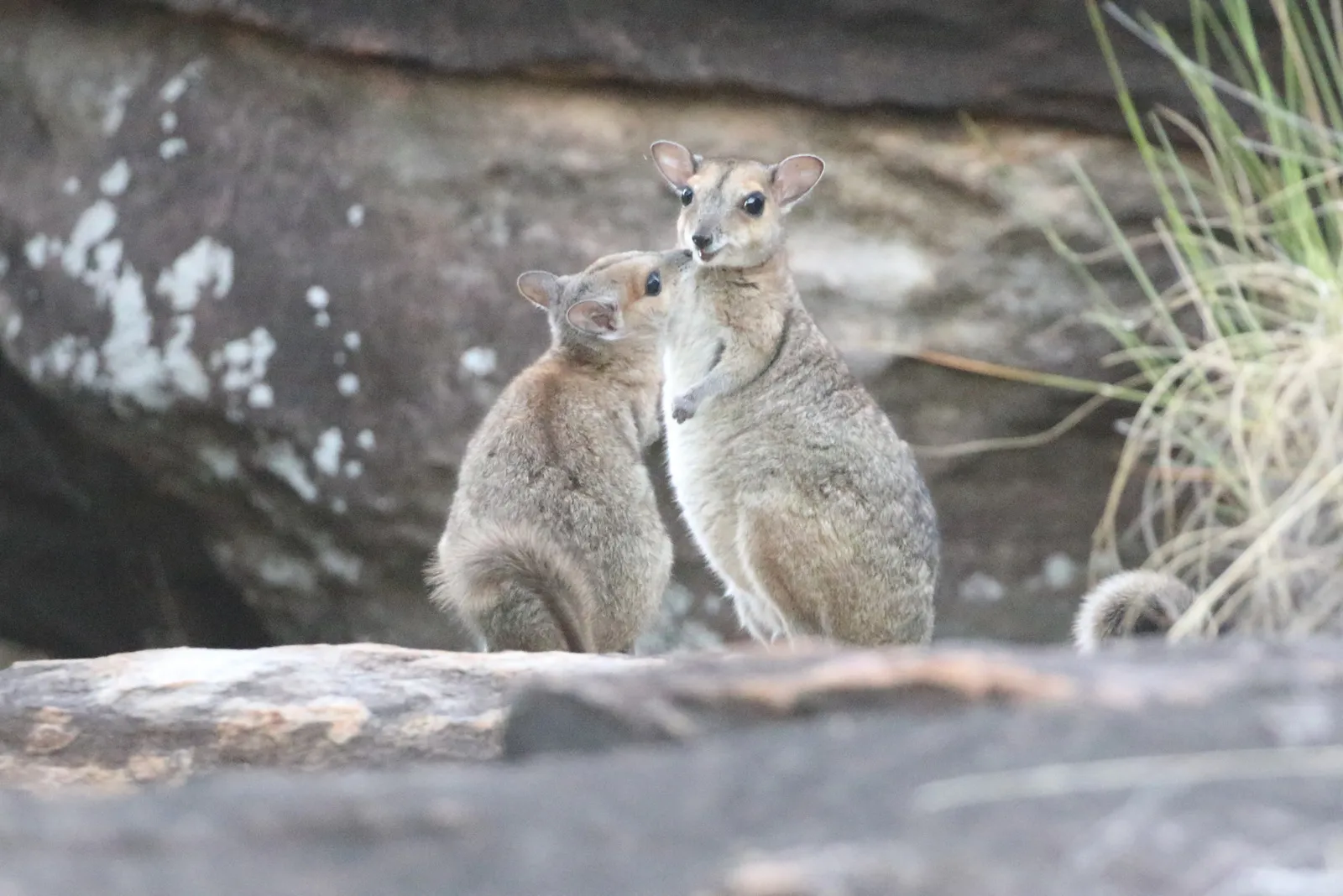
High in the rugged mountains of Australia, the monjon, the smallest of the rock-wallabies, lives a discreet life. Their endearing appearance captivates all who have the fortune to encounter them. Let's delve into the world of the monjon and explore their unique adaptations and the challenging environment they call home.
Monjon Basic Infomation

| Property | Value |
|---|---|
| Scientific Name | Petrogale burbidgei |
| Taxonomic Status | ACCEPTED |
| Rank | SPECIES |
| Vernacular Names | Monjon |
| Kingdom | Animalia |
| Phylum | Chordata |
| Class | Mammalia |
| Order | Diprotodontia |
| Family | Macropodidae |
| Genus | Petrogale |
| Habitats | Australia |
| Conservation Status | Least Concern (LC) |

Size
They measure about 12 to 13 inches (31 to 34 centimeters) in body length, with tails measuring about 10 to 12 inches (25 to 30 centimeters). They are exceptionally small, weighing only about 2.2 to 3.7 pounds (1 to 1.7 kilograms). Males are larger than females.

Lifespan
Their lifespan in the wild is estimated to be around 4 to 6 years.

Distribution
They are found only in the Kimberley region of northwestern Australia, inhabiting rocky outcrops and cliffs.
Monjon Q&A

What kind of wallaby is the monjon?
The monjon, also known as Burbidge's rock-wallaby, is a small species of rock-wallaby endemic to northwestern Australia.
They are the smallest of all rock-wallaby species. In English, they are often referred to as 'monjon.' They have grayish-brown fur with a white belly. Their face has distinctive black markings, and their large, round eyes contribute to their endearing appearance. They are nocturnal, spending the day resting in the shade of rocks or in caves. They become active at night to forage for food. They are often solitary but may sometimes form small groups of a few to a dozen individuals.

What do monjons eat?
Monjons are herbivores, primarily eating grasses and leaves.
They are most active in the mornings and evenings, foraging for food. They have an excellent sense of smell, allowing them to find fallen fruits and seeds on the ground. They prefer to eat soft grasses and leaves. They also need to drink water and may venture to rivers or puddles to quench their thirst.

[Quiz!] Why do monjons live on rocky outcrops?
Monjons have adapted to living in rocky areas, where they find several advantages:
・Protection from predators: Rocky outcrops offer many crevices and caves that provide shelter from predators.
・Thermoregulation: Rocks absorb heat during the day and release it at night, helping monjons regulate their body temperature.
・Food availability: Rocky outcrops often have a variety of succulents, a favored food source for monjons. Succulents store water in their leaves, stems, and roots, providing a source of moisture in the dry environment.
Rocky outcrops provide a comfortable and secure habitat for monjons.

[Quiz!] Are monjons endangered?
Monjons are listed as 'Least Concern' (LC) on the IUCN (International Union for Conservation of Nature) Red List.
This means that they are not currently considered endangered. However, their numbers may be declining in some areas due to habitat loss from development, road accidents, and predation by introduced species like dogs and foxes. To protect monjons, it is essential to conserve their rocky habitats and promote coexistence with humans.

Would you like to become a part of the 'Animalbook.jp'?
Turn your knowledge into Q&A and share it with the world. ※Publication will be activated after purchase. Let's share information together!
Monjon Type of List

Characteristics of Monjons
- Smallest of the rock-wallaby species
- Grayish brown fur
- White belly
- Black markings on the face
- Large, round eyes
- About 12 to 13 inches (31 to 34 centimeters) in body length
- Tail about 10 to 12 inches (25 to 30 centimeters) long
- Weigh about 2.2 to 3.7 pounds (1 to 1.7 kilograms)
- Found only in northwestern Australia
- Live in areas with lots of rocky terrain, such as rocky outcrops and cliffs
- Nocturnal
- Often solitary
- Herbivorous
- Least Concern (LC)
Information
Congratulations! You are the first commenter!

Create Your Favorite List!
Monjon
Save the animals you love! Build your own list to quickly revisit your favorites later.

Would you like to leave a comment?
※Please note: This is for the purchase of rights to post comments within the article.
Find Your Favorites!
Our shop offers a unique and attractive selection of goods themed around various animals.
Monjon References
Monjon Introduction of media used

Richard Fuller, CC0, via Wikimedia Commons

Help Enrich Our Animalbook.jp with Your Media!
We are constantly looking to expand and enrich our Animalbook.jp with amazing photos and videos of animals. If you have any media that you'd like to share, please contribute and help us showcase the beauty and diversity of the animal kingdom. Your submissions will be credited and featured in our encyclopedia, reaching a wide audience of animal lovers.


